3D Printed Wedding Place Cards: The Complete Guide
Every guest finds their seat, every name doubles as a favor they take home, and a late plus-one costs you twelve minutes instead of a panicked email to a calligrapher. Here is how couples plan it, what it costs, and when to print.
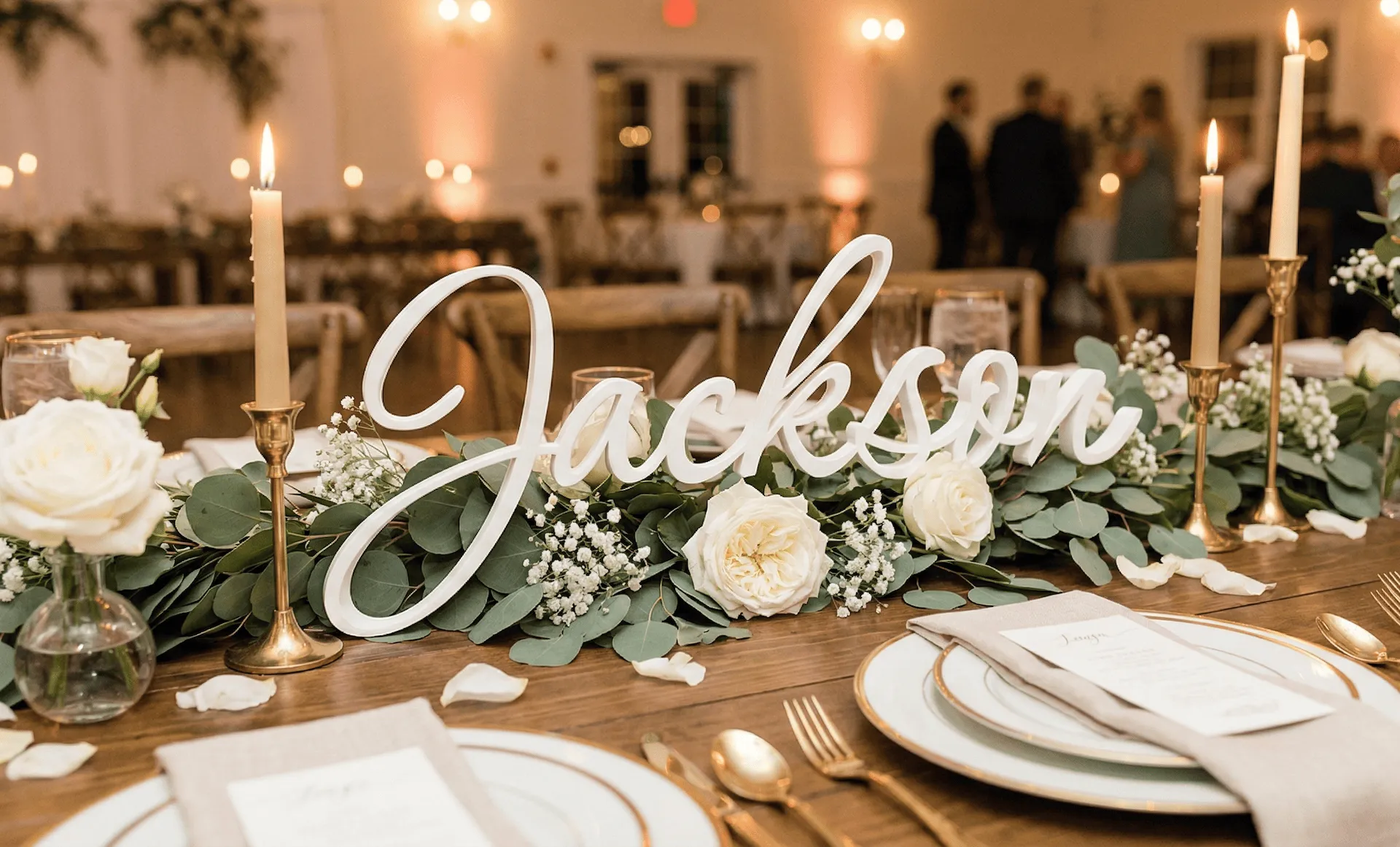
Why Couples Are Ditching Paper Cards
Paper Place Cards
- In the trash by midnight, along with the calligraphy budget
- One gust of wind at an outdoor venue rearranges your seating
- Calligraphers need the final guest list weeks before you have it
- A spilled glass of red turns 'Charlotte' into a watercolor
3D Printed Names
- Guests pocket them as favors, so one budget line covers two
- Heavy enough to stay put on a breezy terrace table
- A last-minute guest is a 12-minute reprint, not a crisis
- Wipeable, stackable, and done weeks before the wedding
Names or numbers for the tables themselves are covered on wedding table names.
Planning more than place cards? Start with 3D printed wedding ideas, from cake toppers to favours.
The Timeline (Work Backwards from Your RSVP Deadline)
The quiet advantage of printing your own names: calligraphy and print shops need your final list four to six weeks out, which is exactly when your list is least final. Printing collapses that window.
Pick the font and material, and print one test name. Put it on a plate at home with your napkins and check it from a guest's seat. One test print settles every design debate.
Type the confirmed names into the generator, one after another. Designing 100 names is an evening on the couch, not a project.
Print in batches. A plate of 12-15 names runs unattended, so a casual week of evening prints covers a 100-guest wedding with margin to spare.
Reprint the stragglers: the new girlfriend, the cousin who finally answered, the typo nobody caught. Each fix is minutes, and the box is alphabetized and ready before the rehearsal dinner.
What 100 Place Cards Actually Cost
Silk PLA filament costs about $25 per kilo, and a place-card-sized name weighs 10-15 grams. The math is hard to argue with:
In gold or silver silk filament, including a few reprints. Less than most couples spend on table number holders.
At the typical $2-4 per card for 100 guests, plus rush fees for every late change to the list.
Guests take their names home, which quietly deletes a separate favor line from the budget.
Choosing the Right Aesthetic
Fonts: Cursive vs. Block
"Fonts set the mood for your entire table."
Cursive reads as classic and romantic: Corinthia is the closest to wedding calligraphy, Dancing Script a touch more relaxed. Block fonts like Oswald suit modern, minimalist, or industrial venues. Whichever you pick, pick once; a mixed-font table looks like a seating chart assembled from leftovers.
Material Choices
Silk gold and silver PLA are the wedding standards: the metallic sheen reads as cast metal in candlelight and photographs beautifully. White or matte pastel PLA fits boho and garden weddings, and it spray-paints well if your palette is specific.
Mastering the Size
Sizing is what separates 'cohesive tablescape' from 'craft fair'. For standard 25-30 cm dinner plates, these letter heights work:
- 20mmSubtle, lies flat on the napkin
- 30mmThe standard: visible from a standing guest's eye line
- 40mm+Statement pieces for head table and sweetheart table
Small Decisions That Save You Later
- First names only. 'Alexandra' already fills a plate; 'Alexandra Vandenberg-Schmidt' is a banner. Use a last initial only to split duplicates: two Emmas become Emma K. and Emma R.
- Keep one letter height for all names. Short names print narrower, long names wider, and that variation looks intentional. Varying the height does not.
- Turn on the standing base if names should stand upright at each setting. Skip it and lay names flat on the napkin or plate for a more understated look.
- Print two or three blanks worth of extra filament time into your plan. Someone's name will change spelling between the RSVP and the wedding. It always does.
Wedding Place Card FAQ
How much do 3D printed place cards cost for 100 guests?
Around $30-40 in filament. Each name uses 10-15 grams of silk PLA at roughly $25 per kilo. Compare that with $200-400 for calligraphed or letterpress cards at typical per-card rates, and the printed names double as take-home favors.
How long does it take to print 100 wedding place cards?
About 2-2.5 hours of printer time per plate of 12-15 names, or seven to eight plates for 100 guests. Started three weeks before the wedding, that is one unattended plate per evening with a week to spare for reprints and late RSVPs.
What font looks most like wedding calligraphy?
Corinthia is the closest match to classic calligraphy, with fine connected strokes that print cleanly at 30 mm letter height. Dancing Script gives a softer, more casual script. Print one test name before committing: a font that looks delicate on screen can read differently in metallic filament on a real plate.
Do the names stand up on their own?
Yes, if you enable the standing base option in the generator, which adds a slim plate under the letters. Without it, names lie flat on the napkin or plate, which many couples prefer for a minimal look. Cursive names with the base also work afterwards as desk or shelf decor, which is exactly why guests keep them.
What happens with last-minute guest changes?
This is the strongest argument for printing: a new name is typed in under a minute and printed in about twelve, so a plus-one announced on Wednesday has a place card by Wednesday dinner. Keep 100 grams of your wedding filament in reserve for exactly this.
Ready to design yours?
Type the first name on your list and see it in 3D in seconds.
Generate Wedding Names ✨Don't have a 3D printer? Read our guide on the best printer for beginners